Building a Human Being: What a Child’s Upbringing Really Needs
If wood and steel need tools, skill and a plan before they become something useful, how much more does a child? Our Director, Engineer Maulana Irfan Ali, on what upbringing really needs: a starting point, resources, a method, and review that helps rather than ranks.
By Director, Engineer Maulana Irfan Ali, Ameen Islamic Institute.
Have you ever thought about what it takes to turn a piece of wood into a table, a door or a cupboard? The wood alone is not enough. It needs the right tools, a skilled craftsman, a sound method, time and steady work. Steel is no different: it too needs its own resources, skills and an organised system.
The big question
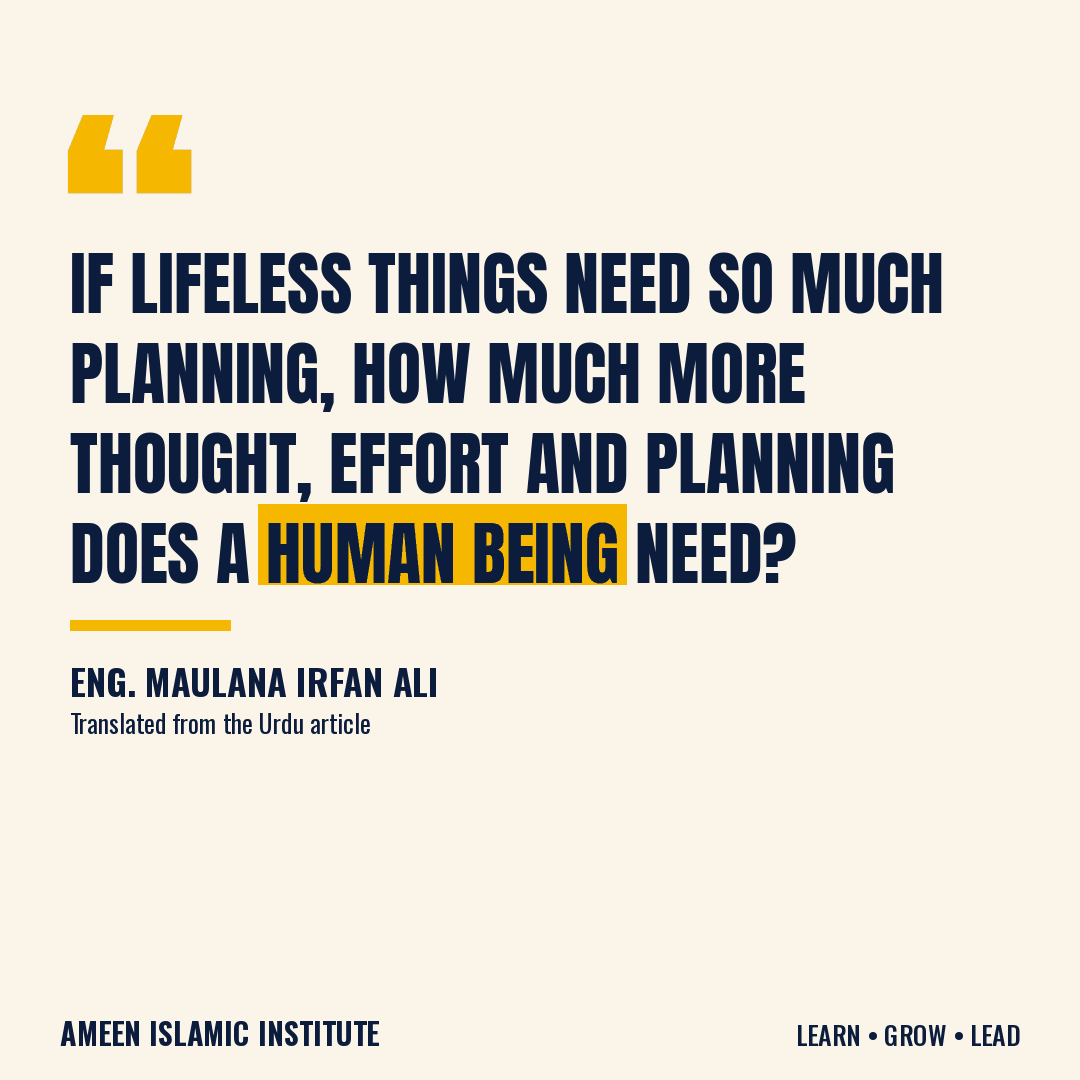
If lifeless things need this much planning… how much thought, effort and planning does it take to build the character and personality of a human being?
That question made me look at the upbringing of children in a new way. It is the question this article is about.
A human being is not a piece of wood
At birth, a human being is in a sense raw material: a conscious being with great potential, shaped over the years by the environments he grows up in. The comparison with wood helps us see that raw material alone is never enough. A chair needs the skill of its maker and the right tools.
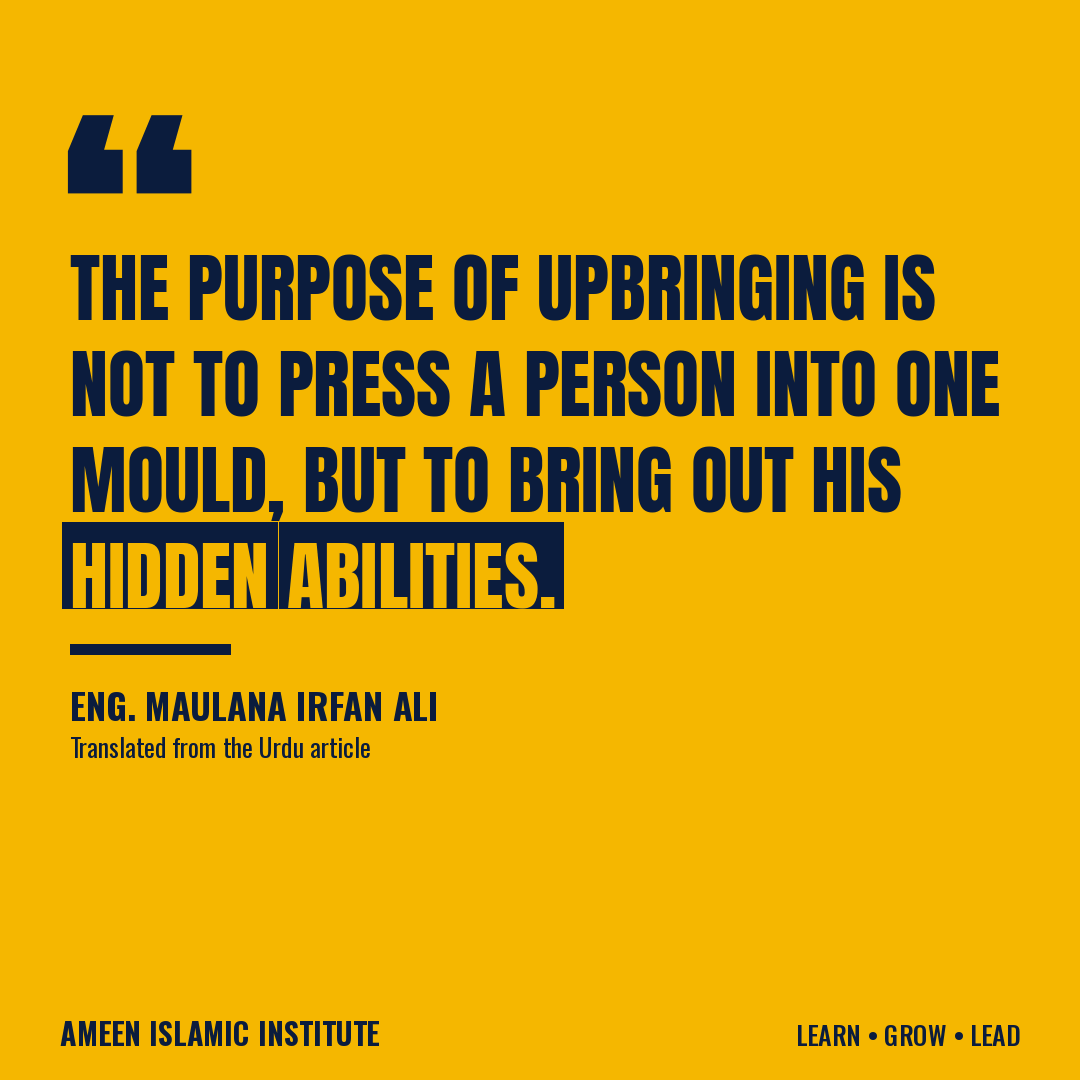
But the comparison has a limit, and the limit matters. A piece of wood has no wishes. A child has abilities, interests, feelings, intentions and needs of his own. So the aim of upbringing is not to press a person into one mould. It is to bring out his hidden abilities, improve his thinking, and help him become responsible, capable and of good character.
The Quran points to this difference between people:
قُلْ كُلٌّ يَعْمَلُ عَلَىٰ شَاكِلَتِهِ فَرَبُّكُمْ أَعْلَمُ بِمَنْ هُوَ أَهْدَىٰ سَبِيلًا
“Say, Everyone acts according to his own disposition, and your Lord knows best who is best guided on the way.”
Surah Al-Isra 17:84
Each child acts according to his own disposition, so no two children are built with exactly the same tools. A good teacher and a good parent first learn what a child is like, and then give him the environment, the tools and the skills he needs. Our tradition teaches that people are created with a natural inclination toward the truth. What a child needs is the right surroundings in which to grow it, for this life and the next.
Four things upbringing needs
- A starting point. Every child begins with his own abilities, earlier knowledge, interests and experiences. The first step is to understand where he is now and what kind of guidance he needs to move on.
- Resources. Parents, teachers, the school, the curriculum, books and the wider community all shape a child. They must be present, and they must be used well.
- A method. Giving information is only part of education. Upbringing goes further: practice, activities, questions, observation, responsibilities and chances to learn from one’s own mistakes.
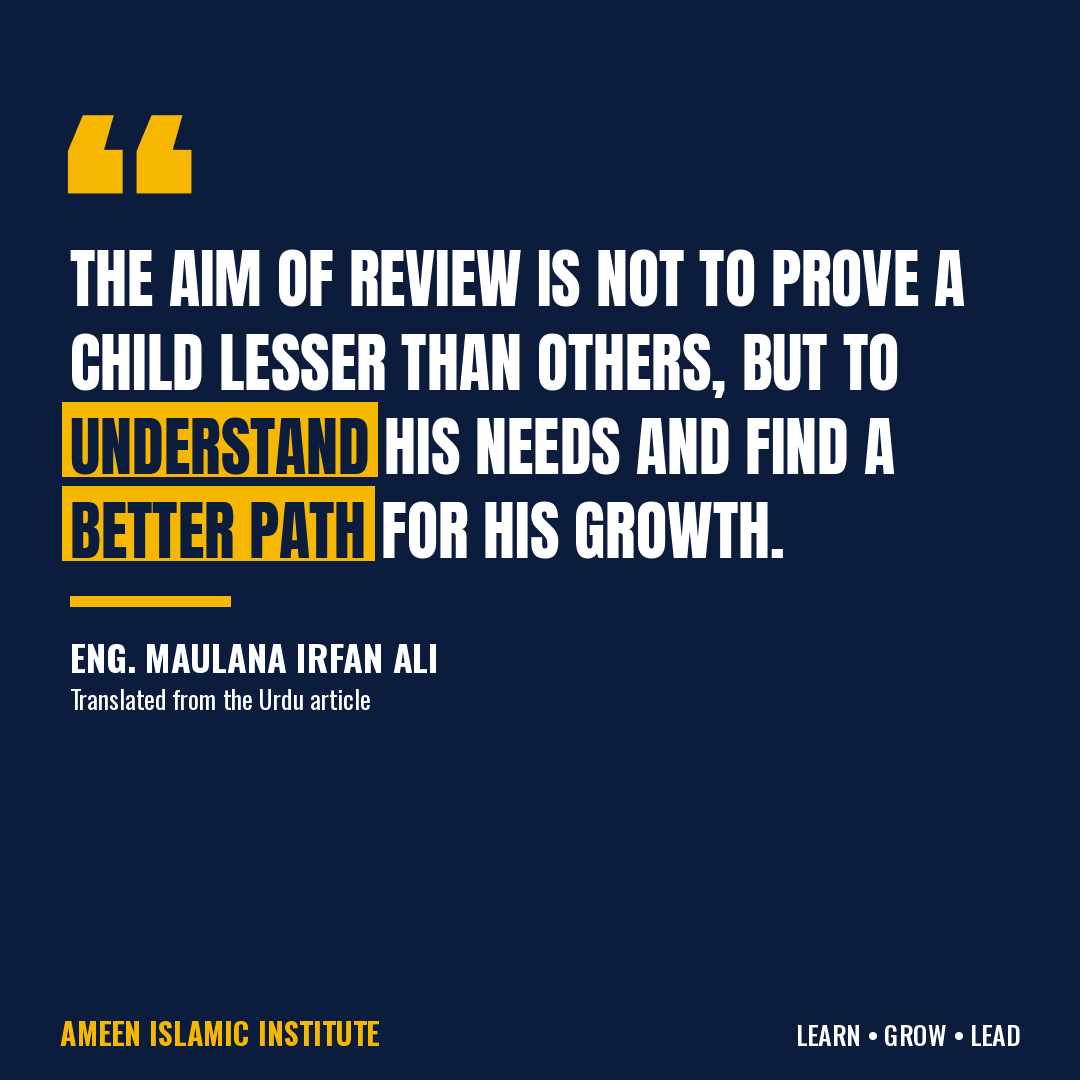
- Review and improvement. We check the quality of what we make, and we should check a child’s progress too. But the purpose is not to show a child to be lesser than others. It is to understand his needs and find a better path for his growth.
| In the workshop | In the school | |
|---|---|---|
| Raw material | Wood or steel, with no wishes of its own | A child with his own abilities, interests, feelings and needs |
| Tools | Saws, planes, measuring instruments | Books, curriculum, activities, a healthy environment |
| The craftsman | A skilled carpenter or metalworker | Teachers and parents, working together |
| The method | A plan, clear steps, time and steady work | Practice, questions, observation, responsibility and learning from mistakes |
| Quality check | Inspect the finished product | Review progress to understand needs, not to rank children |
Created in the best of forms
A child who understands his own worth carries himself differently. The Quran describes the human being in these words:
لَقَدْ خَلَقْنَا الْإِنسَانَ فِي أَحْسَنِ تَقْوِيمٍ
“We have certainly created man in the best of forms.”
Surah At-Tin 95:4
That is why our work goes beyond teaching subjects. We want every child to build his self-esteem, to believe in his own ability (self-efficacy), and to know that he is honoured by his Creator. A child who knows this is far better placed to take responsibility and to help others.
Do we decide the results first?
If a school wants to build confidence, responsibility, moral awareness, critical thinking and the ability to solve problems, its system must show those aims clearly. Four questions are worth asking honestly:
- Does our curriculum develop these abilities?
- Do our teaching activities give children a chance to practise them?
- Do teachers review each child’s progress?
- Do we change our approach according to what we find?
If we make these questions part of our system, upbringing stops being a daily routine and becomes a purposeful process that keeps improving.
Iqra: learning to understand yourself
As we all know, the first word of the Quran revealed was Iqra, “Read”. The Quran guides us to read, to learn and to grow. To build a human being to his core, we must also help a child understand himself or herself. Imam al-Ghazali, may Allah have mercy on him, taught that knowledge of the self leads to knowledge of God.
In a school, we help a child toward self-knowledge through metacognition, the habit of thinking about one’s own thinking, and through a holistic learning environment. When a pupil gives a wrong answer, telling him the right one is not enough. He should be helped to see why the mistake happened, how he understood the problem, and how he can do better next time. That habit leads to self-accountability, better planning and independent learning.
What our teachers say
“The most powerful question in teaching is not ‘What did you learn?’ but ‘How did you learn it?’”
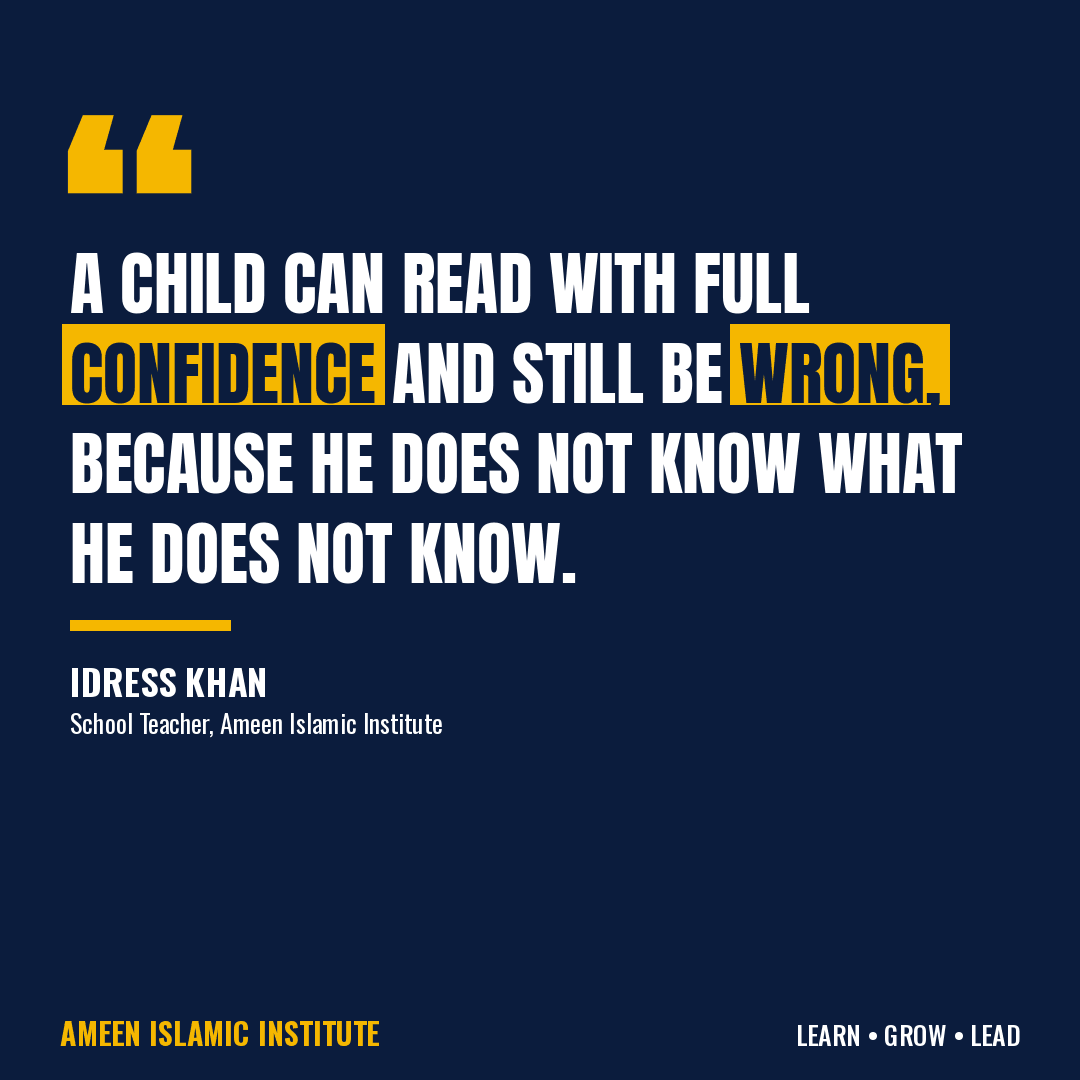
“A child can read with full confidence and still be wrong, because he does not know what he does not know. That is why a teacher’s job is not only to give knowledge, but to help every child look at his own thinking, and to listen alongside him until his awareness becomes accuracy.”
“I promise to ask ‘How did you do it?’ as often as ‘What is the answer?’, to treat every mistake as a step towards improvement, and to reflect honestly on my own teaching.”
Idress Khan, School Teacher, Ameen Islamic Institute
A shared task for parents and teachers
Upbringing cannot be left to the school alone, or to the home alone. A child’s personality grows from many environments, experiences and relationships. If school teaches responsibility, discipline and honesty, but these values are not encouraged at home and in society, it is hard for a child to keep acting on them. That is why contact between parents and teachers, shared goals and regular review of a child’s progress are essential parts of an effective system.
A gift of time
The primary and middle years are a gift. A child who learns in these years to understand himself, to build his self-esteem and self-efficacy, and to see his own worth, can lead his way to college and university with the will and the power to help others.
The real success of upbringing lies not only in reaching the result we wanted, but in the journey: the child learns, understands his mistakes, refines his abilities and comes to know the rights and responsibilities of others. Perhaps we should ask ourselves, in every school, a more serious question:
Are we only teaching children, or are we also building a system that helps them recognise their abilities, improve their thinking and become responsible human beings?
Asking that question is the first step toward a better, purposeful and coherent system of upbringing.
About the author. Engineer Maulana Irfan Ali is the Director of Ameen Islamic Institute. His MPhil research explores the relationship between metacognitive frameworks and educational practices in higher educational institutions.
Comments
No comments yet. Share your thoughts below.